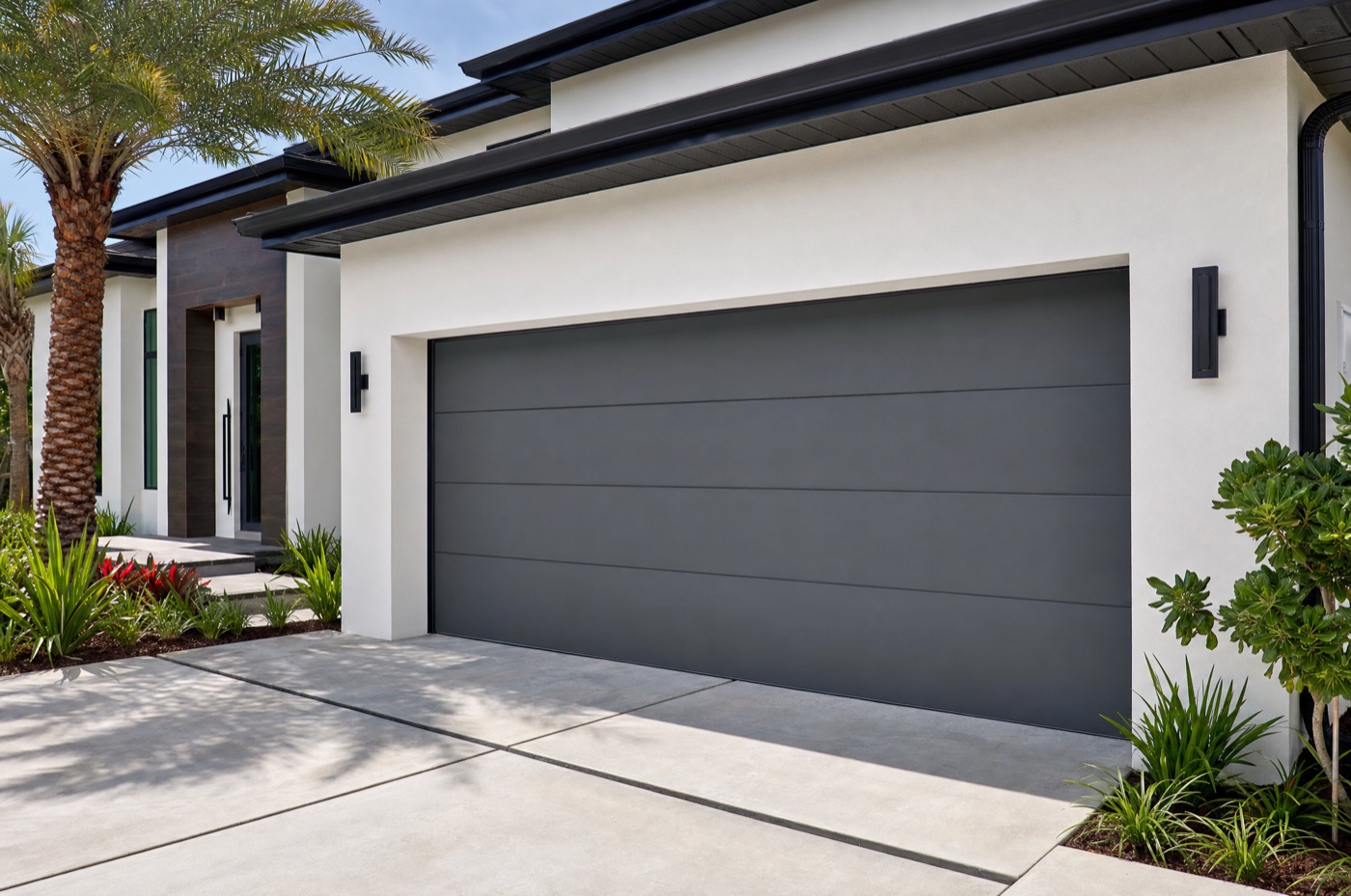
Choose the right material for your garage door based on durability, maintenance, aesthetics, and budget.
Limited to first-time customers
Get 10% OFF your repair
Applied right on your estimate, no games. You see & approve your exact price before any work starts.
By tapping, you agree to receive your coupon by text from All Point. Msg & data rates may apply.
Pick a time online — approve the price on your phone, track your tech on a live map.
Your garage door material impacts everything from curb appeal and energy efficiency to long-term maintenance costs and durability. Understanding the characteristics of each material helps you make an informed decision that aligns with your home's style, local climate, and budget. Here's a comprehensive guide to help you choose the perfect garage door material.
Steel is the most popular garage door material in America, and for good reason. Modern steel doors offer exceptional value, combining affordability with durability and low maintenance requirements.
Best for: Most homeowners seeking the best combination of value, durability, and low maintenance. Ideal for families with active children or areas with harsh weather.
Wood garage doors offer unmatched natural beauty and customization potential. They provide a classic, high-end appearance that enhances luxury homes and period properties.
Best for: High-end homes, historic properties, and homeowners who value authentic wood aesthetics and are willing to invest in regular maintenance. Perfect for carriage house styles.
Aluminum garage doors are lightweight, rust-resistant, and offer a contemporary aesthetic. They work particularly well in modern architectural designs and coastal environments.
Best for: Contemporary and modern homes, coastal properties where rust is a concern, and homeowners who want aluminum-frame glass doors for natural light in their garage.
Composite garage doors combine wood fibers with resins to create doors that look like wood but without the intensive maintenance. They offer the best of both worlds for many homeowners.
Best for: Homeowners who want the appearance of wood without the maintenance commitment. Excellent for humid climates, coastal areas, and busy families who prioritize low maintenance.
Insulation is one of the most important factors in garage door performance, especially if your garage is attached to your home or you use it as a workspace. Proper insulation reduces energy costs, minimizes noise, and improves door durability.
R-value measures thermal resistance. Higher R-values mean better insulation and energy efficiency.
Lightweight panels (R-4 to R-6). Affordable and common in steel doors.
Injected foam (R-12 to R-18). Superior insulation, adds structural strength, reduces noise.
For attached garages or homes in extreme climates, we recommend polyurethane insulation with an R-value of at least R-12. If you use your garage as a workshop or living space, consider R-16 to R-18 for maximum comfort and energy efficiency. Detached garages in mild climates can perform well with R-6 to R-10 insulation.
Your local climate plays a crucial role in determining which garage door material will perform best and last longest. Different materials respond differently to temperature extremes, humidity, salt air, and UV exposure.
Areas with harsh winters, heavy snow, and freezing temperatures require doors that can handle thermal stress and ice buildup.
Key Features: High R-value insulation, weatherstripping, bottom seal protection against ice
Desert and hot climates with intense UV exposure and extreme daytime heat require materials resistant to fading and warping.
Key Features: UV-resistant finishes, insulation to reduce heat transfer, light colors to reflect sunlight
Ocean proximity means salt air corrosion and high humidity that can cause rust and rot in certain materials.
Key Features: Rust-resistant materials, corrosion-resistant hardware, moisture barriers
Areas with mild weather and moderate temperature ranges have the most flexibility in material selection.
Key Features: Focus on style preferences and long-term maintenance commitment
Our garage door experts will help you select the ideal material based on your climate, budget, style preferences, and long-term needs. Get personalized recommendations today.
Call Now: (954) 758-9868Selecting the right garage door material involves balancing multiple factors. Use this decision framework to narrow down your options and find the perfect match for your home.
Start by identifying your climate zone and primary weather challenges. Extreme temperatures, humidity, salt air, or intense UV exposure will immediately eliminate certain materials and highlight the best performers for your area. This is your most important consideration for long-term durability.
Consider both upfront costs and long-term maintenance expenses. While wood doors have the highest initial price and ongoing costs, steel offers excellent value with minimal maintenance. Calculate total cost of ownership over 10-15 years.
Typical Price Ranges (installed):
Be honest about how much time and effort you're willing to invest in garage door upkeep. Wood requires painting or staining every 2-3 years. Steel and composite need only occasional washing. If you prefer a "set it and forget it" approach, avoid wood.
Your garage door should complement your home's architectural style. Traditional homes pair beautifully with wood or composite carriage house designs. Contemporary homes shine with aluminum and glass. Modern steel doors can work with virtually any style.
Traditional/Colonial:
Wood, composite, steel carriage house
Contemporary/Modern:
Aluminum with glass, flush steel panels
Craftsman/Bungalow:
Wood, composite with window details
Ranch/Suburban:
Steel, aluminum, composite (all styles)
If your garage is attached or conditioned space, insulation becomes critical. Steel and composite doors offer the best insulation options (up to R-18). For detached garages in mild climates, insulation matters less. Calculate potential energy savings if you heat or cool your garage.
Consider your household's lifestyle. Active families with children playing sports should prioritize dent-resistant materials. High-security areas benefit from steel's strength. If you rarely use your garage door, durability concerns are minimal.
Choose Steel if you want:
Choose Wood if you want:
Choose Aluminum if you want:
Choose Composite if you want:
Still not sure which garage door material is right for your home? Our experienced team has installed thousands of garage doors across all climate zones and architectural styles. We'll evaluate your specific situation and recommend the perfect material to match your needs, budget, and aesthetic preferences.